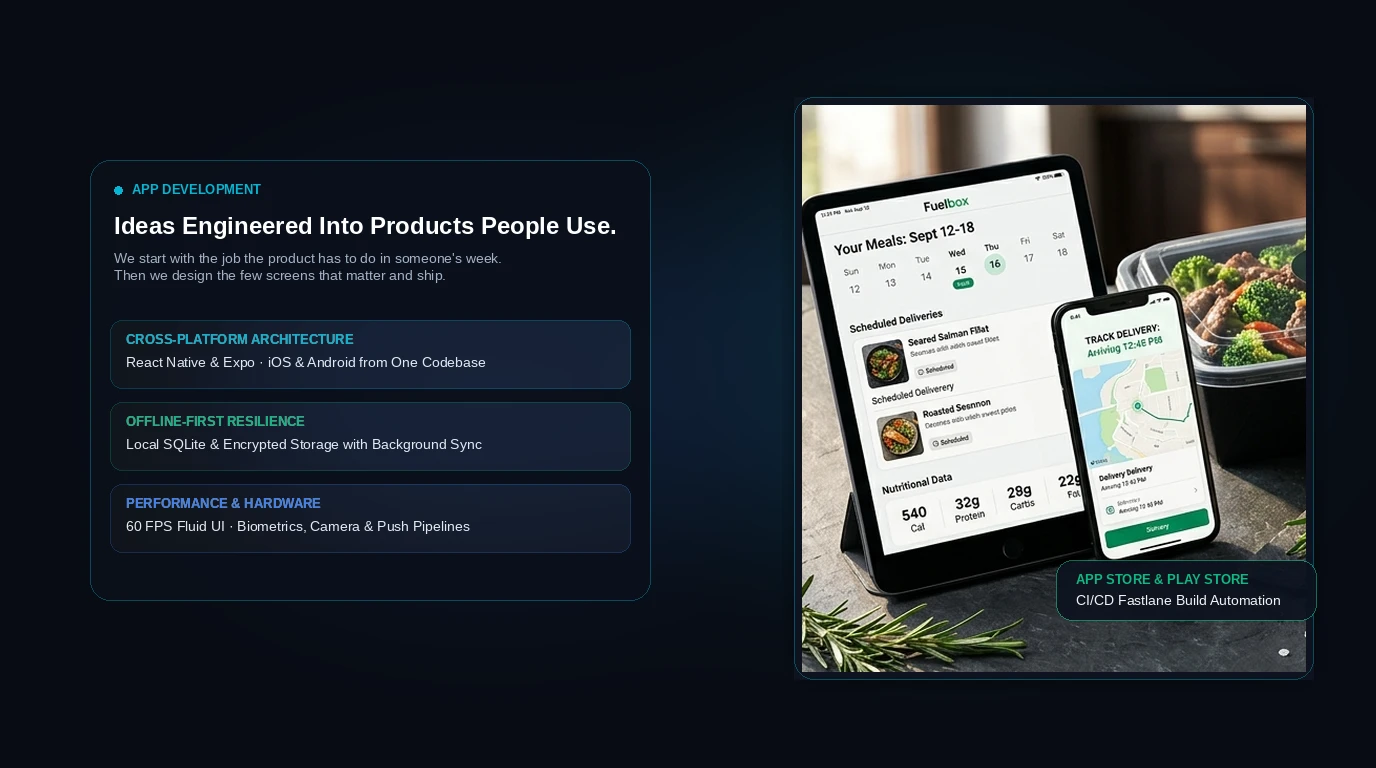
- All UI interactions read and write directly to an encrypted local SQLite database.
- Mutations are appended to a persistent queue and synchronized idempotently when connectivity returns.
- Optimistic UI updates give users immediate tactile feedback with zero network latency.
Mobile users don't care if they are in an elevator, underground transit, or an area with spotty cellular coverage—they expect apps to open instantly and save their inputs without showing loading spinners.
Offline-first mobile engineering inverts the conventional API model: your local SQLite database is the single source of truth, and network synchronization runs asynchronously in the background.
1. The Local-First Data Flow
Instead of waiting for a network response to update application state, the client writes directly to local storage. UI components observe the database reactively, rendering state updates in under 16ms.
A background sync engine continually polls network availability, processing outbound mutation queues with exponential backoff on connection drops.
Final Architectural Thoughts
Building offline-first requires upfront planning, but the payoff is an app that feels faster, works anywhere, and never loses user data.
Liam O'Connor
AuthorMobile Systems Engineer
Senior engineer at DINVEXA specializing in scalable web systems, automation graphs, and modern full-funnel digital architecture.